Swedish Performance at Exile City, 16th Gwangju Biennial 2026
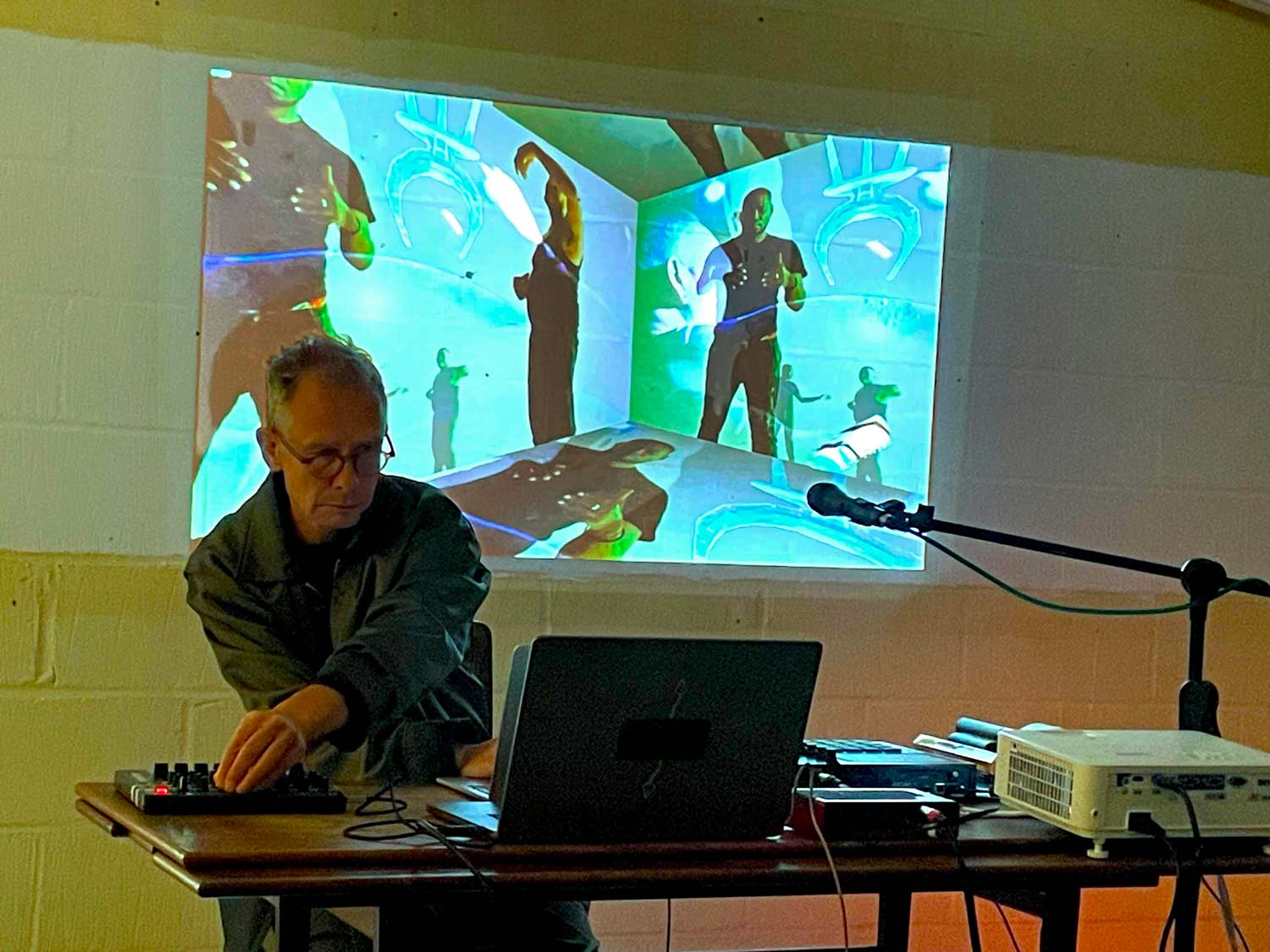
Swedish choreographer and performance artist Carima Neusser and Paris-based artist and musician Per Hüttner propose two thematically linked performances for the finissage of Exile City, November 23, at the 16th Gwangju Biennial 2026 . The artists present one solo performance each. The two pieces have a strong visual presence and reflect on exile and cultural belonging in different ways.
Per Huttner presents a new performance entitled “Microbes in Exile.” During the performance he creates music and moving 3D images. For the piece he collaborates with neuroscientist Robert Oostenveld who studies microbes under a microscope in the Netherlands. The data of the microbes moving will be sent of the internet and will influence both sound and image in real time. He will also incorporate images of the microbes moving in the piece that will also be sent in real time. Thematically, sound and images focuses on the writings of Korean philosopher Byung Chul Han, especially from the book “The Expulsion of the Other,” which looks at what he calls the “terror of the same” in the digital age.
Carima Neusser will present a new performance that is based on Franz Kafka’s “The Castle.” The unfinished novel constitutes an excellent starting point to reflect on exile. In the book, like in the performance, the main protagonist is locked onto a very clear goal – to reach the castle. But does this goal constitute a way to go home or find a new place to create one’s existence remains unclear? The premise allows Neusser to dialogue with the audience and to reflect on what it means to belong to a community, culture or country – at home and in exile. Neusser’s practice hails from dance, so although light, music, props and costume (She uses props like mirrors, prisms and reflective fabrics that affect the architecture around her.) is central to the performance, her physical movements in the space carries a lot of weight. Through her dance practice she looks into the potential of the human body to express itself in new ways.